

VIEW SHOW MATERIAL
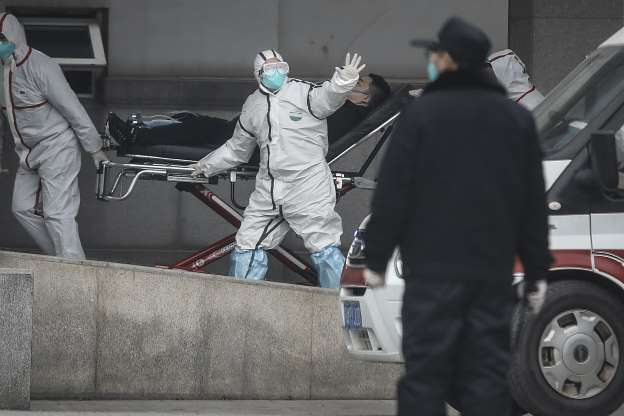
China and the Coronavirus
By: Gerry Shih, Emily Rauhala, Lena Sun - msn.com - February 2, 2020
It was almost the Lunar New Year and Pan Chuntao was feeling festive.
He knew there were reports of a virus in his city, Wuhan. But local officials urged calmness. There was no evidence it was transmitted person to person, they said. They had not reported a new case in days.
On Jan. 16, the 76-year-old left his two-bedroom apartment to attend a government-organized fair.
“We told him not to go because we saw some rumors on WeChat of doctors getting infected,” said Pan’s son-in-law, Zhang Siqiang. “But he insisted on going. He said, ‘The government says it’s not a problem, there are no cases anymore.’ ”
Pan and his daughter may now be among the the 14,300-plus people infected with a new strain of coronavirus — an outbreak that has killed at least 304 people in China, spread to more than 20 countries, disrupted the global economy and left 55 million people in China’s Hubei province under an unprecedented lockdown.
Pan was one of millions of Chinese who mingled, traveled and carried on with daily life during the critical period from mid-December to mid-January.
It was a time when Chinese officials were beginning to grasp the threat of a new contagious disease in Wuhan but did little to inform the public — even with the approach of the Lunar New Year holiday for which hundreds of millions of Chinese travel.
An analysis of those early weeks — from official statements, leaked accounts from Chinese medical professionals, newly released scientific data and interviews with public health officials and infectious disease experts — reveals potential missteps by China’s overburdened public health officials.
It also underscores how a bureaucratic culture that prioritizes political stability over all else probably allowed the virus to spread farther and faster.
“It’s clear that a much stronger public health system could save China lives and money,” said Tom Frieden, former director of the U.S. Centers for Disease Control and Prevention.
Medical professionals who tried to sound an alarm were seized by police. Key state media omitted mention of the outbreak for weeks. Cadres focused on maintaining stability — and praising party leader Xi Jinping — as the crisis worsened.
“China’s public health system has modernized, but China’s political system hasn’t,” said Jude Blanchette, head of China studies at the Center for Strategic and International Studies in Washington. “If anything, there’s been a regression.”


Patient Zero
In mid-December, patients in Wuhan presented with what seemed like a mix of wintry symptoms: fever, trouble breathing, coughs.
It looked like viral pneumonia. But doctors in Wuhan, a city of 11 million in central China, could not pinpoint the cause. Rumors of a mysterious virus started to swirl on Chinese social media, particularly among medical professionals.
It is clear, now, that Chinese officials soon knew something was amiss.
An account published Thursday in multiple Chinese news sites by an anonymous lab technician who claimed to work at a lab contracted by hospitals said that his company had received samples from Wuhan and reached a stunning conclusion as early as the morning of Dec. 26. The samples contained a new coronavirus with an 87 percent similarity to SARS, or severe acute respiratory syndrome.
A day later, lab executives held urgent meetings to brief Wuhan health officials and hospital management, the technician wrote.
The technician’s account, which included extensive images of test results and contemporaneous messages sent by the technician, could not be independently verified by The Washington Post. Scientists outside China would later confirm the genetic sequence bore a striking resemblance to that of SARS.
By the evening of Dec. 30, word was beginning to get out.
At 5:43 p.m., Li Wenliang, an ophthalmologist at Wuhan Central Hospital, told his fellow medical school alumni in a private chat that seven people had contracted what he believed to be SARS, and one patient was quarantined at his hospital.
He posted a snippet of an RNA analysis finding “SARS coronavirus” and extensive bacteria colonies in a patient’s airways, according to a chat transcript that he and other chat members later shared online.
That same evening, Wuhan’s public health authorities took action.
The health commission sent an “urgent notice” to all hospitals about the existence of “pneumonia of unclear cause” — but omitted any mention of SARS or a coronavirus — and ordered all departments to immediately compile information about known cases and report them up their chain of command.
27 cases
[...]
59 cases
[...]
221 cases
[...]
4,500 cases
[...]
12,000 cases and counting
[...]
To see the remainder of this article, click read more.

Source: https://www.msn.com/en-us/news/world/early-missteps-and-state-secrecy-in-china-probably-allowed-the-coronavirus-to-spread-farther-and-faster/


