

VIEW SHOW MATERIAL
Assault Weapons and Second Amendment
By: David French - nationalreview.com - February 21, 2018
Banning them would gut the concept of an armed citizenry as a final, emergency bulwark against tyranny.
Arguments about guns tend to suffer from two distinct problems. The first — and most obvious — is they quickly get screechy. The arguments devolve into shouting matches and temper tantrums. The goal isn’t to persuade but to mock and bully, as if stigma alone can decisively shift the public debate. The second problem occurs when the debate gets too wonky. Charts and graphs fly across Twitter, as if fundamental questions about liberty and American society can be answered by the right kind of cross-country comparison with Australia, Great Britain, or Switzerland.
When facing the big questions about guns — such as whether America should “ban” an entire category of weapons (such as “assault weapons”) — it’s better, I think, to go back to the first principles embodied in the Second Amendment. At its core, the Amendment protects a person’s individual inherent right of self-defense andempowers the collective obligation to defend liberty against state tyranny. As Justice Scalia noted in District of Columbia v. Heller, this concept was fully embedded in the founding generation:
And, of course, what the Stuarts had tried to do to their political enemies, George III had tried to do to the colonists. In the tumultuous decades of the 1760’s and 1770’s, the Crown began to disarm the inhabitants of the most rebellious areas. That provoked polemical reactions by Americans invoking their rights as Englishmen to keep arms.
Any given gun-control measure must be evaluated against the background of those twin purposes. That’s one reason why statements such as “The Second Amendment was only designed to protect muskets” are so ridiculous. Imagine trying to defend your family with a flintlock pistol. The right of self-defense is best understood as a right of effective self-defense, and the tools for effective self-defense will evolve right along with weapon design and development. Any other conclusion leads to absurd results. Consequently, as the Supreme Court held, the amendment protects weapons “in common use at the time.”
FBI Failed to Investigate Tip About Florida Gunman
This means that if gun-control measures “freeze” the nature and types of guns that are lawful for civilian use, even as broader gun development proceeds apace, there will be an ever-widening gap between the capacity of a criminal to do harm and law-abiding citizens’ ability to protect themselves from that harm. It will also lead to such a yawning gap between citizen and state that private gun ownership no longer provides any meaningful deterrent to tyranny.
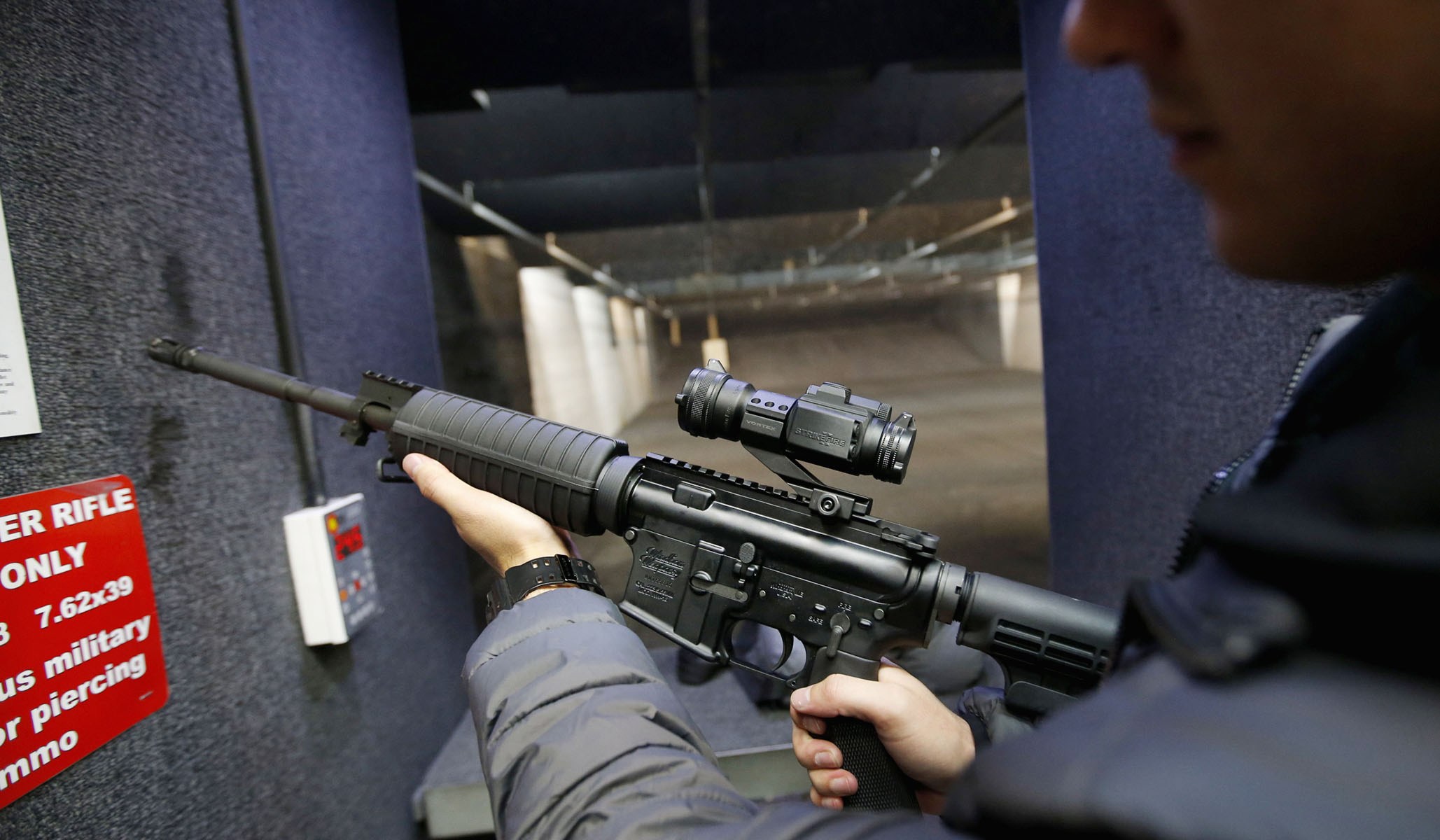
And this brings us to the two favorite targets of those who argue for so-called commonsense gun control — assault weapons and high-capacity magazines. While the term “assault weapon” is vague, we’ll define it as a semi-automatic rifle with cosmetic features similar to military weapons. They’re typically paired with high-capacity magazines. In fact, an “assault weapon” without a high-capacity magazine is little more than a menacing-looking hunting rifle.
There are millions of assault weapons in America. The AR-15 is the most popular rifle in the nation. There are tens of millions of high-capacity magazines, and they’re extraordinarily easy to make. Both are unquestionably in “common use.”
This means that the foreseeable criminal threat to you or your family comes from a person wielding — at the very least — a semiautomatic pistol with a high-capacity magazine. This is one reason that police typically don’t carry revolvers. Their own weapons of choice have evolved to deal with the threat, and — as my colleague Charlie Cooke is fond of noting — if a person doesn’t “need” a high-capacity magazine to defend himself, then why do the police use them?
If I use an AR-15 for home defense, then I possess firepower that matches or likely exceeds (given how rarely rifles are used in gun crimes) that of any likely home intruder. Limit the size of the magazine to, say, ten rounds, and you’ve placed the law-abiding homeowner at a disadvantage. Prohibit them from obtaining a compact, easy-to-use, highly accurate carbine, and you’ve ensured that homeowners will be defending themselves with less accurate weapons. The best weapons “in common use” would be reserved for criminals.
Moreover, an assault-weapon ban (along with a ban on high-capacity magazines) would gut the concept of an armed citizenry as a final, emergency bulwark against tyranny. No credible person doubts that the combination of a reliable semiautomatic rifle and a large-capacity magazine is far more potent than a revolver, bolt-action rifle, or pump-action shotgun. A free citizen armed with an assault rifle is more formidable than a free citizen armed only with a pistol. A population armed with assault rifles is more formidable than a population armed with less lethal weapons.
Citizens must be able to possess the kinds of weapons that can at least deter state overreach.
The argument is not that a collection of random citizens should be able to go head-to-head with the Third Cavalry Regiment. That’s absurd. Nor is the argument that citizens should possess weapons “in common use” in the military. Rather, for the Second Amendment to remain a meaningful check on state power, citizens must be able to possess the kinds and categories of weapons that can at least deter state overreach, that would make true authoritarianism too costly to attempt.
I fully recognize that there are many millions of Americans who flatly disagree with the notion that armed citizens either can or should try to deter tyranny. Either their trust in the government is so complete (or their sense of futility in the face of its armed might so great) that they don’t believe private ownership of weapons is a meaningful check on lawless government action, or they believe that the cost of widespread civilian gun ownership is simply too high to pay in exchange for a theoretical check on state power. That’s a debate worth having — in the context of a long-term progressive effort to repeal the Second Amendment. But for now, the Founders have settled question.
As Justice Scalia ably articulated in Heller, the Second Amendment was designed to protect what Blackstone called “the natural right of resistance and self-preservation.” Without access to the weapons in common use in our time, the law-abiding citizen will grow increasingly — and intolerably — vulnerable to the lawless. Thus, to properly defend life and liberty, access to assault weapons and high-capacity magazines isn’t a luxury; it’s a necessity.
 Source: Assault Weapons: An Emergency Bulwark against Tyranny | National Review


